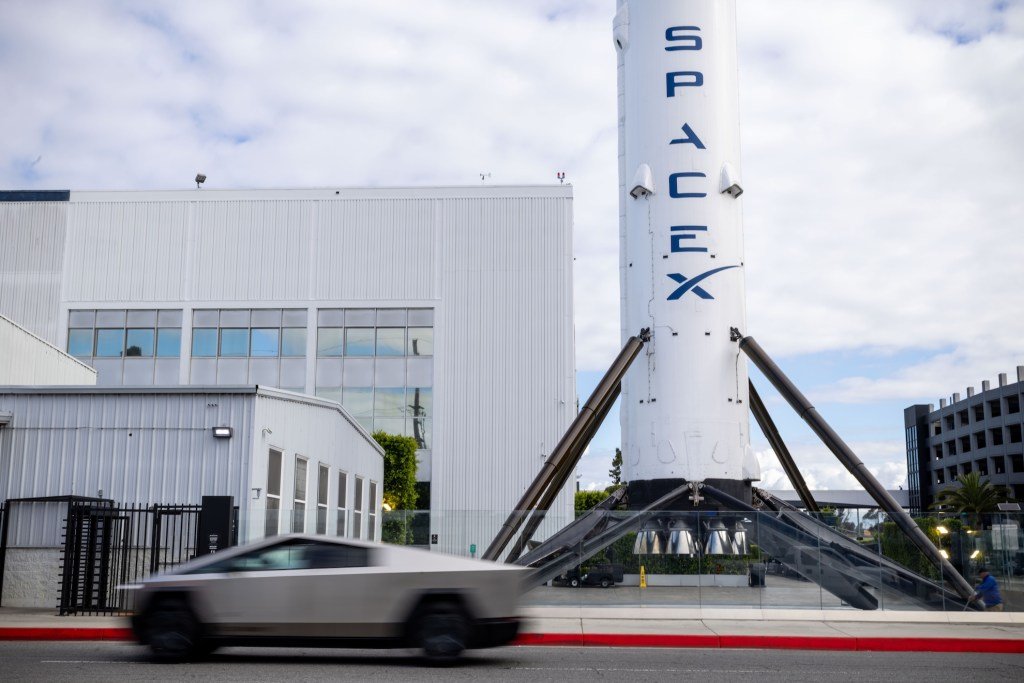

SpaceX AI Business Beats Expectations With $7.5 Billion in Revenue
SpaceX’s artificial intelligence business is emerging as a major growth engine, generating approximately $7.5 billion in third-quarter 2026 revenue as Elon Musk expands the company’s investments in AI computing, data centers, and software. The company reported $14.6 billion in total revenue for the quarter, with its AI-focused business accounting for more than half of its income, according to TechCrunch. The results highlight SpaceX’s transformation from a primarily aerospace company into a major player in artificial intelligence and cloud computing. SpaceX AI Revenue Surges in Q3 2026 SpaceX’s AI division, branded Super Intelligence, generated approximately $7.5 billion in revenue and $431 million in operating income during the third quarter. The business combines several operations, including the Grok AI chatbot, the Cursor coding platform, and cloud computing services that provide AI developers with access to computing infrastructure. The company’s AI computing capacity reached 1.7 gigawatts as of September 30, reflecting its investment in infrastructure to meet growing demand for AI workloads. The strong performance suggests that SpaceX is generating significant revenue not only from AI software but also from supplying the computing resources needed to develop and operate advanced AI systems. Data Centers and Cloud Computing Drive Growth SpaceX is investing heavily in AI data centers as demand for computing power increases. Its cloud infrastructure business allows customers to access computing capacity without building and operating all the necessary facilities themselves. The company is also expanding its Colossus II data center project in Memphis, Tennessee. Elon Musk said he spends four days a week in Memphis working to bring the facility online. Musk has argued that electricity, cooling systems, and infrastructure have become major obstacles to expanding AI computing capacity. SpaceX is attempting to address these challenges using its engineering and manufacturing capabilities. For example, the company is applying its metal-casting expertise to produce components for power-generating turbines, potentially helping it overcome supply chain delays. Grok and Cursor Strengthen SpaceX’s AI Business SpaceX’s AI operations include products and services aimed at different parts of the artificial intelligence market. These offerings give SpaceX multiple ways to generate revenue from the AI boom, including software subscriptions, enterprise adoption, and infrastructure services. However, the division’s reported $431 million in operating income included $1.2 billion in stock-based compensation related to the Cursor acquisition, which affected its quarterly results. SpaceX Returns to Quarterly Profitability SpaceX reported $14.6 billion in total third-quarter revenue and $4.4 billion in net income, compared with a net loss of approximately $1 billion in the same quarter last year. Despite the improved results, the company faces substantial investment costs. Capital expenditures reached $19.6 billion during the quarter as SpaceX continued developing data centers, Starship, and infrastructure for future Starlink satellites. Chief Financial Officer Bret Johnsen projected another $35 billion to $40 billion in capital investments for the fourth quarter. These spending levels show the scale of SpaceX’s ambitions, but they also underline the challenge of turning rapid AI growth into sustained profitability. Starlink and Starship Remain Central to the Strategy Artificial intelligence is not replacing SpaceX’s existing businesses. Its satellite internet service, Starlink, reached 13.6 million consumer subscribers, according to TechCrunch. Musk expects growing use of AI agents to increase demand for reliable internet connectivity. Meanwhile, SpaceX continues developing Starship, which could support future Starlink deployments and the company’s longer-term ambitions for orbital computing infrastructure. Combining satellite connectivity, reusable rockets, and AI data centers could give SpaceX a distinctive position across several technology markets. Elon Musk Predicts Massive AI Revenue Growth Musk has set an ambitious target for SpaceX’s AI business, predicting annual recurring revenue of between $500 billion and $1 trillion by the end of 2027. That forecast remains a projection rather than a guaranteed outcome. Reaching it would require substantial growth in customer demand, computing capacity, and commercial adoption. For now, SpaceX’s latest earnings demonstrate that AI infrastructure and software have become important contributors to its business. Whether the company can maintain this momentum while managing its enormous investment costs will be a key question for investors and the broader technology industry. *Source: [TechCrunch]